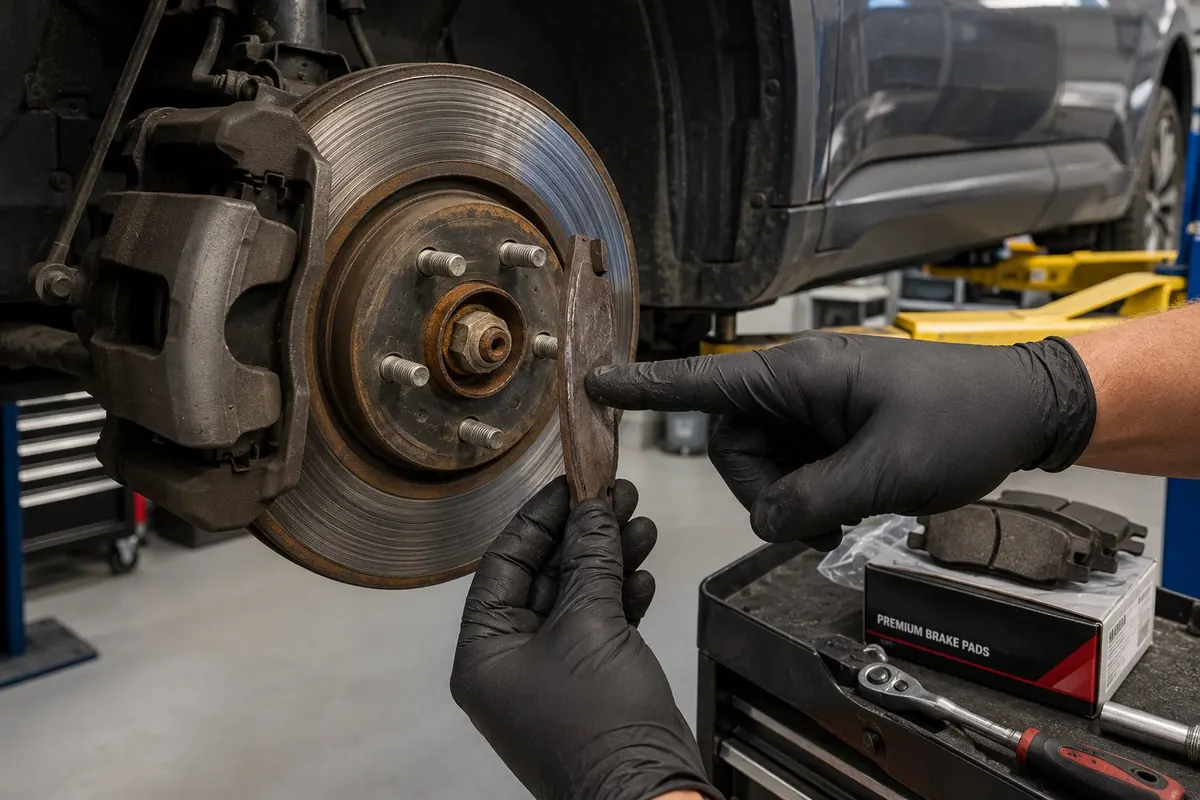
Brakes don't fail without warning. They give you weeks — sometimes months — of obvious signs before they actually stop working. The trouble is, most drivers ignore those signs until something serious happens. Here are the five clearest signals that your brakes are due for service.
1. Squealing or Screeching Sounds
That high-pitched squeal when you press the brake pedal isn't random. Most modern brake pads have a small metal tab built into them called a wear indicator. Once the pad wears down to a critical thickness, that tab makes contact with the rotor and creates the screech — a deliberate audible warning.
If you're hearing it, your pads have maybe a few hundred to a few thousand miles left depending on driving conditions. Schedule service soon.
2. Grinding or Metal-on-Metal Noise
If the squeal turned into a deep grinding sound, you've waited too long. The pad material is gone, and metal backing is now scraping against your rotor. This causes:
- Severely reduced stopping power
- Damage to the rotor (which now needs replacement, not just the pads)
- Risk of brake failure under hard braking
If you hear grinding, drive slowly directly to a shop or call for a tow. Don't keep driving.
3. Vibration or Pulsation in the Pedal
When you press the brakes — especially at highway speeds — does the steering wheel shake or the pedal pulse under your foot? That's almost always a warped rotor. Rotors warp from heat (from heavy braking, towing, or stop-and-go traffic in summer) or just from normal wear over time.
Warped rotors don't fail catastrophically right away, but they significantly reduce braking effectiveness and stress the rest of the brake system. Have them turned (resurfaced) or replaced.
Birmingham reality: Heavy traffic on I-65, I-20, and Highway 280 means a lot of stop-and-go braking, which heats up rotors and accelerates wear. If you commute on these roads daily, expect to replace pads every 30,000-50,000 miles.
4. Brake Pedal Feels Soft, Spongy, or Goes to the Floor
A normal brake pedal has firm, immediate resistance. If yours feels soft — like there's air in the line — or sinks toward the floor before grabbing, you have a hydraulic problem:
- Air in the brake lines (needs bleeding)
- Low brake fluid (could be a leak)
- Failing master cylinder
- Damaged brake line
This is a serious issue. A spongy pedal is one warning sign away from total brake failure. Get it inspected immediately — don't drive far.
5. Pulling to One Side When You Brake
If your car drifts left or right when you press the brakes, one side is gripping more than the other. Possible causes:
- Stuck caliper on one side
- Uneven pad wear
- Damaged brake hose
- Contaminated brake fluid on one side
This isn't just inconvenient — it can be dangerous in an emergency stop, causing the vehicle to swerve into another lane.
Bonus Signs to Watch For
Brake Warning Light On the Dashboard
That little circle with an exclamation point isn't decoration. It usually means low brake fluid, which usually means a leak or worn pads. Don't ignore it.
Burning Smell After Heavy Braking
A sharp chemical smell after coming down a long hill or after several hard stops means your brakes have overheated. Pull over and let them cool. Repeated overheating warps rotors and damages pads.
Visible Pad Wear
Look through your wheel spokes at the brake caliper. You should see at least 1/4 inch of pad material on the rotor. If you see less than 1/4 inch — or just metal — it's time.
How Often Should Brakes Be Inspected?
For most Birmingham drivers:
- Pads: Inspect every 12,000 miles or annually
- Rotors: Inspect when pads are replaced
- Brake fluid: Replace every 2-3 years (it absorbs moisture over time)
Average Cost in Birmingham
Front brake pad replacement cost varies by vehicle — standard cars sit at the lower end of the range, while trucks, SUVs, and performance vehicles run higher. Rotors add to the bill if they need replacement too.
What If Your Brakes Already Failed?
If your brakes give out completely while driving, don't panic:
- Pump the brake pedal repeatedly — sometimes you can build up pressure
- Downshift to a lower gear to slow the engine
- Use the parking brake gradually (not all at once)
- Steer to the shoulder safely
- Once stopped, turn on hazards and call for a tow
Don't try to drive a car with failed brakes home or to the shop. Honeycutt Towing handles brake-failure tows throughout the Birmingham metro 24/7. Call 877-724-6639.